The cost to own a racehorse starts with the purchase price and then adds roughly $60,000 a year to keep a horse in training, according to a law-firm article from August 2025. At public auction, the median North American yearling sold for $35,000 in 2025 per the Jockey Club Fact Book, while Keeneland’s September sale had a median of $80,000 and an average of $175,807.
This guide breaks the cost into purchase, training, insurance and fees, works through three examples with the arithmetic shown, and marks which numbers are estimates.
Many pages give one wide range with no dates. We separate auction results and official pages from blog estimates, and we do not present estimates as fact.
Cost to Own a Racehorse: The Short Answer
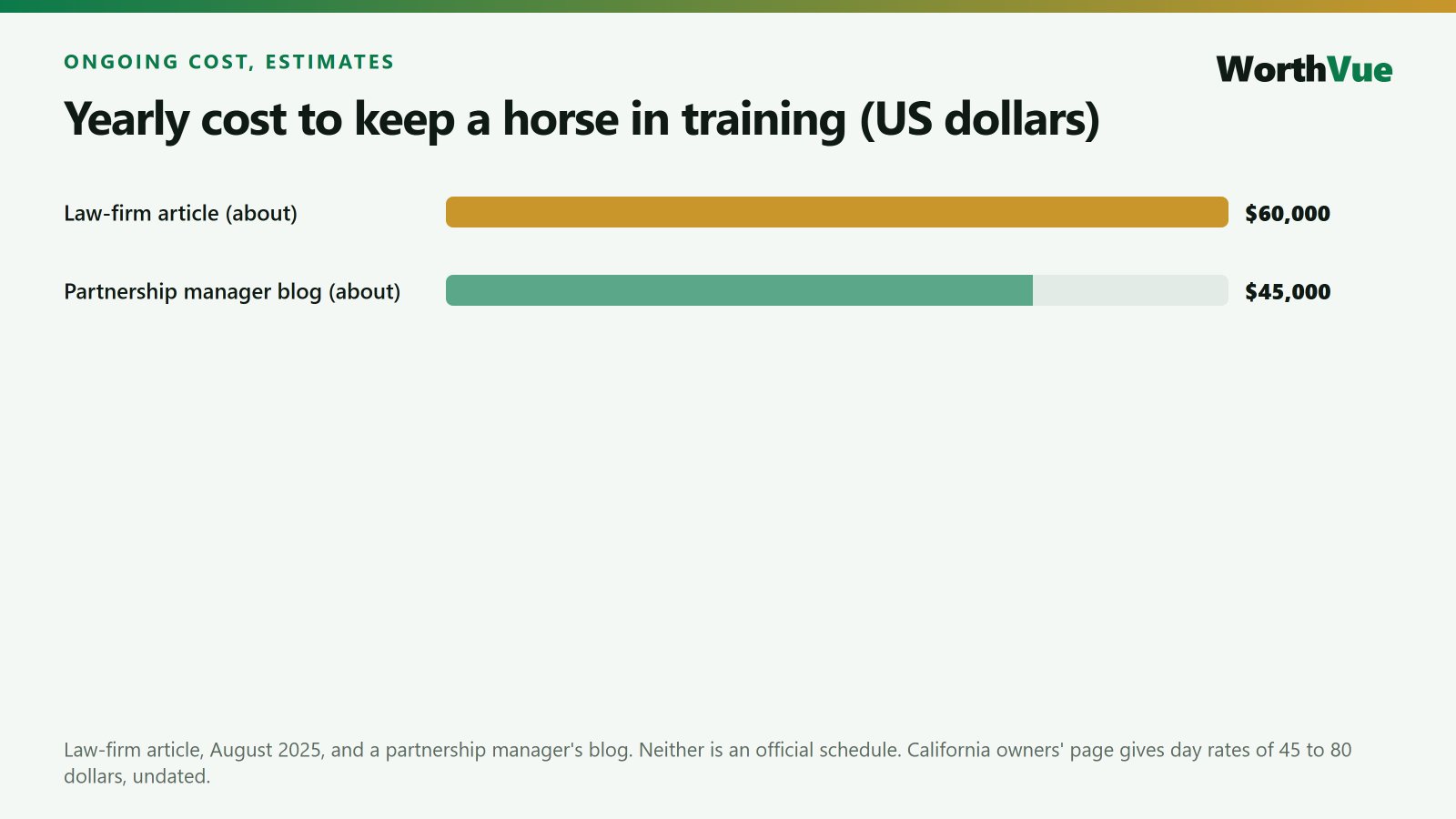
There is no single price. Claiming races start below $5,000 and go to six figures, public auction yearlings have a median of $35,000 across North America and $80,000 at Keeneland’s September sale, and a racing club share can start at $50 to $100 per unit. Keeping a horse in training costs about $45,000 to $60,000 a year according to the two sources we found, and neither is an official schedule.
Cost to Own a Racehorse: What You Pay to Buy
Yearling auctions publish their own results. Keeneland’s September 2025 sale sold 3,070 yearlings for a gross of $531.5 million, an average of $175,807 and a median of $80,000, with 56 yearlings at $1 million or more and a top price of $3.3 million. Its 2026 sale was higher, with an average of $187,933, a median of $85,000 and a top price of $3.7 million. Fasig-Tipton’s July 2025 sale sold 156 for an average of $107,872 and a median of $90,000.
The Jockey Club Fact Book covers all North American yearlings sold in 2025: 7,058 yearlings, an average of $113,432 and a median of $35,000, up from a median of $27,000 in 2024. The gap between average and median shows that a few expensive horses lift the average, so the typical yearling costs far less than a headline average suggests.
The Keeneland 2025 average appears as $175,807 in one release and slightly different in others, so treat small differences as rounding between releases.
Claiming Races: The Cheapest Way to Buy
A claiming race lets an owner buy a horse for a set price. The 2026 Claiming Crown lists claiming levels from $8,000 to $35,000, with purses of $100,000 to $200,000. America’s Best Racing said in November 2026 that claiming prices range from under $5,000 to six figures, and that the purse goes to the previous owner if the horse is claimed. We could not find a dated, track-by-track list of typical claiming prices.
Training, Boarding and Care: The Yearly Cost to Own a Racehorse
We found no official national schedule for day rates. The Thoroughbred Owners of California page puts trainer day rates at $45 to $80, undated, and its handbook gives $50 to $110 a day, farm care of $17 to $50 a day, veterinary costs of $200 to $300 a month and insurance of about 5 percent of the horse’s value.
A law-firm article in August 2025 puts keeping a horse in training at about $60,000 a year, and a partnership manager’s blog puts it at about $45,000. We did not use per-track day rates of $120 to $200 that appeared on blogs because they were not sourced.
Racing Clubs and Shares: The Lower-Cost Way In
Shares let you own a fraction. An SEC filing from 2023 for Commonwealth Thoroughbreds shows $50 units, with sourcing fees of up to 15 percent and management fees of 10 to 20 percent. MyRacehorse says its shares start at $100, with a 15 percent management fee and a 5 percent bloodstock fee.
A United Kingdom racing club sells a 5 percent share for £2,900 all in. These are the providers’ own published terms, dated differently, so check current terms before buying.
Three Examples: What the Cost to Own a Racehorse Looks Like
These are illustrations. The purchase prices are assumptions that sit inside the sourced ranges, and the yearly cost uses the roughly $60,000 law-firm figure for a horse in training. They leave out the purchase-sale taxes, shipping, farrier and other extras we could not source.
What Racehorses Earn
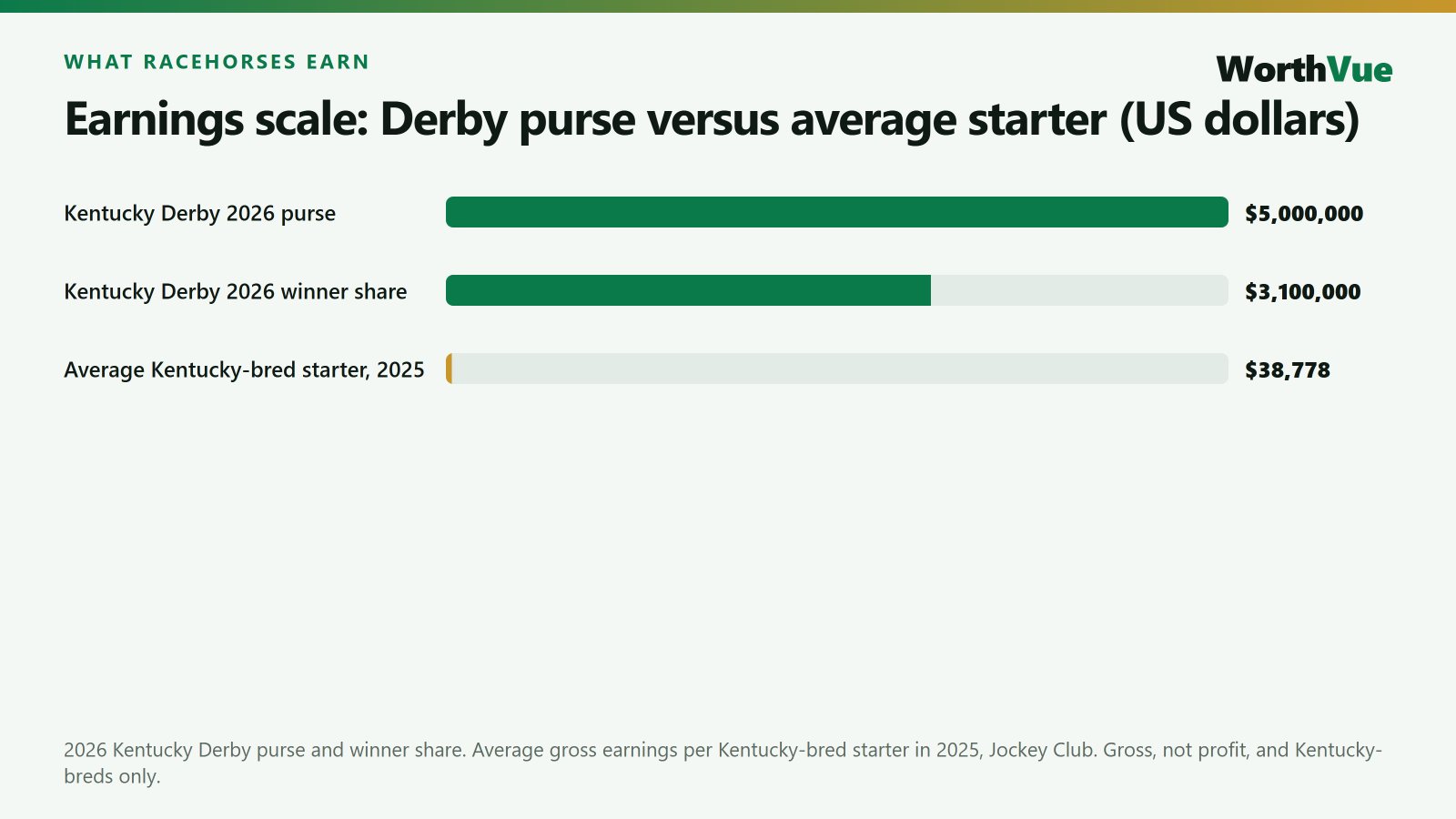
Purses can be large at the top: the 2026 Kentucky Derby purse was $5 million, with $3.1 million to the winner. The Jockey Club reports that Kentucky-bred starters averaged $38,778 in gross earnings in 2025, which is not profit and covers only Kentucky-breds. Setting that average beside the roughly $60,000 yearly cost shows how rarely a single horse pays for itself, but the two numbers come from different populations and we make no claim about profit rates.
What We Could Not Verify
- A dated national day-rate survey. Two industry sites returned errors, so day rates rest on the California owners’ page and the law-firm figure.
- Typical claiming prices by track. Condition books would not open.
- Profit rates for owners. We found no sourced figure and make no claim.
- US traditional partnership buy-ins. We found no sourced minimum.
- Google’s AI Overview ranges. We could not confirm its $2,500 to $300,000 purchase range, its $2,500 to $50,000 claiming range or its $30 to $120 day rates as stated.
How much does it cost to buy a racehorse?
It depends on the route: claiming prices run from under $5,000 to six figures, and the median North American yearling sold for $35,000 in 2025, with a Keeneland September median of $80,000.
How much does it cost to keep a racehorse in training?
About $60,000 a year according to a law-firm article and about $45,000 according to a partnership manager’s blog. Both are estimates.
Can you own a racehorse for $100?
Some racing clubs sell fractional shares starting at $50 to $100, with management fees on top, per their published terms.
Do racehorse owners make money?
We found no sourced profit figure. Kentucky-bred starters averaged $38,778 in gross earnings in 2025, which is not profit.
Is racehorse insurance extra?
Yes. The California owners’ handbook gives about 5 percent of the horse’s value for insurance.
Key Takeaways
- The median North American yearling sold for $35,000 in 2025, and Keeneland’s September median was $80,000.
- Keeping a horse in training costs roughly $45,000 to $60,000 a year per the sources we found, which are estimates.
- Claiming prices run from under $5,000 to six figures.
- Racing club shares can start at $50 to $100 per unit, with management fees on top.
- We found no sourced profit rate for owners.
More on WorthVue: compare other cost breakdowns in comic book grading cost and the Virgin Galactic ticket price, see athlete pay in how much boxers make per fight, browse all guides, and read the methodology page for how we treat estimates.
Sources
- Keeneland: September sale concludes with record $531.5 million sales (2025)
- Keeneland: September sale 2026 results
- The Jockey Club Fact Book: yearling sales
- Fasig-Tipton July sale 2025
- Claiming Crown 2026
- America's Best Racing: claiming races
- Thoroughbred Owners of California: operating costs
- Jones Walker via Legal 500: The thrill of the race (August 2025)
- SEC filing: Commonwealth Thoroughbreds (2023)
- NBC New York: 2026 Kentucky Derby purse
- The Jockey Club: Kentucky fact book
Last updated November 2026. Spotted an error? Send a correction with a source.
More from Guides

Cost of Hosting the Olympics: Real Costs of 4 Host Cities
Super Bowl Ad Cost: Airtime, Production and Talent Compared

Salvator Mundi Price: From £45 to $450.3 Million, Every Sale
